A puppy who barks at the mail carrier, the neighbor's cat, a leaf and the dishwasher is not being bad. She is telling you something. The trick is figuring out what, because the fix for boredom barking is different from the fix for fear.
The four common kinds
- Alert barking. Someone is at the door or walking past. Short bursts, ears forward.
- Demand barking. She wants food, play or attention, and barking has worked before.
- Boredom barking. Long, steady barking when she is alone or under-exercised.
- Fear barking. Hackles up, backing away, often at new people or noises.
Start with what she needs
A tired, fed, recently pottied puppy barks less. Two short sniff walks and a few minutes of training a day often take the edge off more than anything else. Puzzle feeders help with boredom too.
Teach a quiet cue
Let her bark two or three times, then say "thanks" or "quiet" in a calm voice and hold a treat near her nose. The moment she stops to sniff it, mark and reward. Slowly wait longer before the treat. Yelling usually sounds like you are barking along.
Don't pay off demand barking
If she barks at you for dinner and you hurry to feed her, she learns that barking works. Wait for a second of quiet, then act. It gets worse for a few days before it gets better.
When people reach for a tool
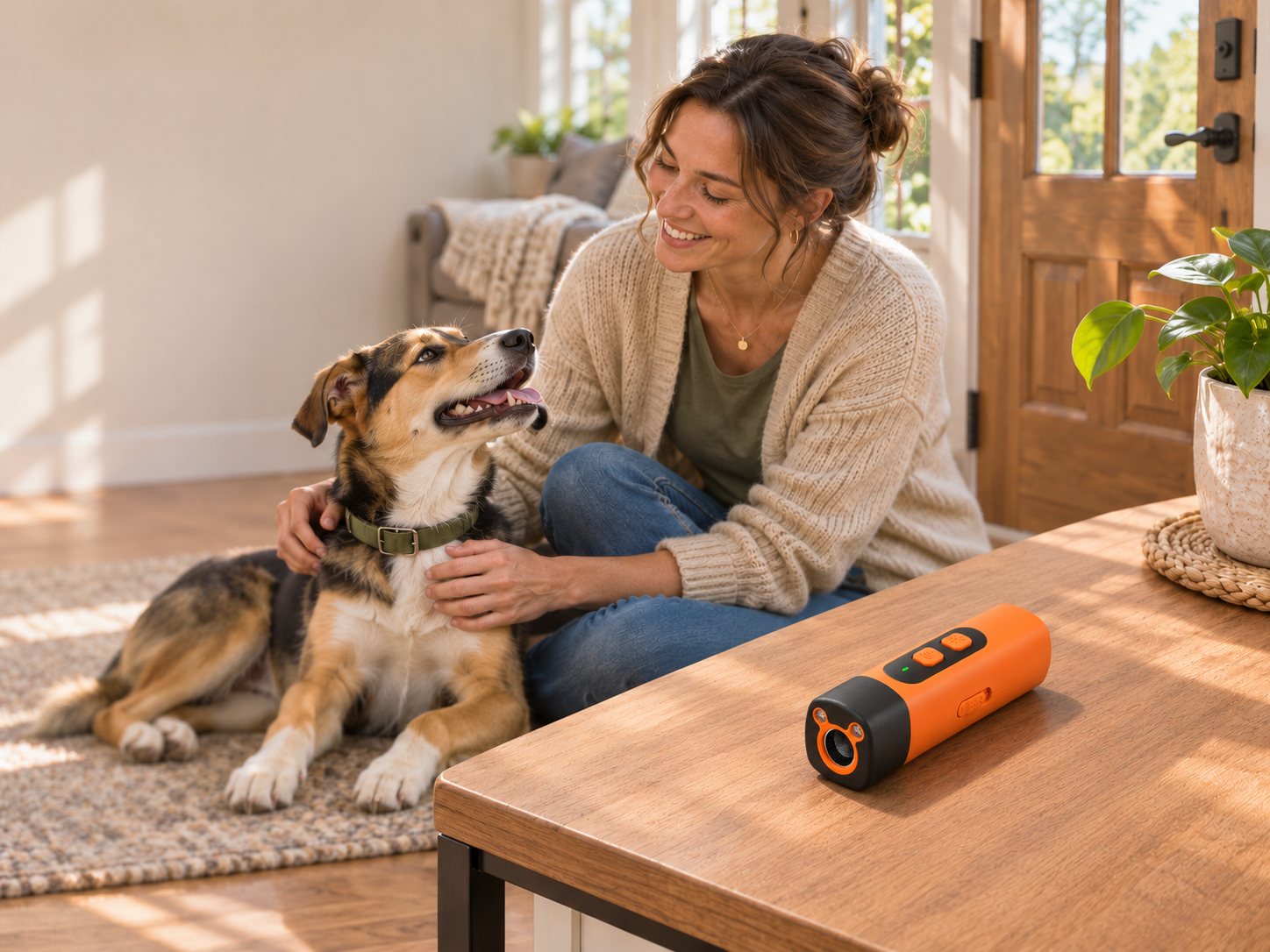
Some owners of older puppies and adult dogs use a handheld ultrasonic bark deterrent as an interrupter, paired with rewarding the quiet. It is not a substitute for meeting her needs, but it can break a loop. You can read how one works, and when it makes sense, in the Love My Puppy bark training guide.
Quick answers
- At what age does barking settle? Many puppies bark less after adolescence if the habit has not been rewarded.
- Should I use a bark collar? Try training and management first, and talk to a trainer about fear barking.